Good food belongs in our community
Driven Forward redistributes surplus and rescued food through our community fridge, helping people make their food budgets go further and keeping good food from going to waste.
Small changes at home help too. Food waste costs a UK household of four an average of £1,000 a year, according to WRAP’s 2026 guidance. Start by checking what you have and planning how to use it.
A little know-how goes a long way
Choose a topic for tips you can use at home.
Know your food dates
Best-before and use-by dates mean different things. Knowing the difference helps you make informed choices about your food.
Best before: quality
A best-before date is about quality. Food may still be suitable afterwards if it has been stored correctly, although its flavour or texture can change. Check for signs of spoilage and follow the guidance for that food.
Use by: safety
Do not eat food after its use-by date, even if it looks or smells fine. Cook or freeze it by that date, following the pack instructions. Incorrect storage can make food unsafe sooner.
Look and smell checks are not a safety test for food with a use-by date. For eggs, the float test indicates age, not whether they are safe to eat. Read the Food Standards Agency’s egg advice.
Read the full guide to food date labels →
See our best-before posters
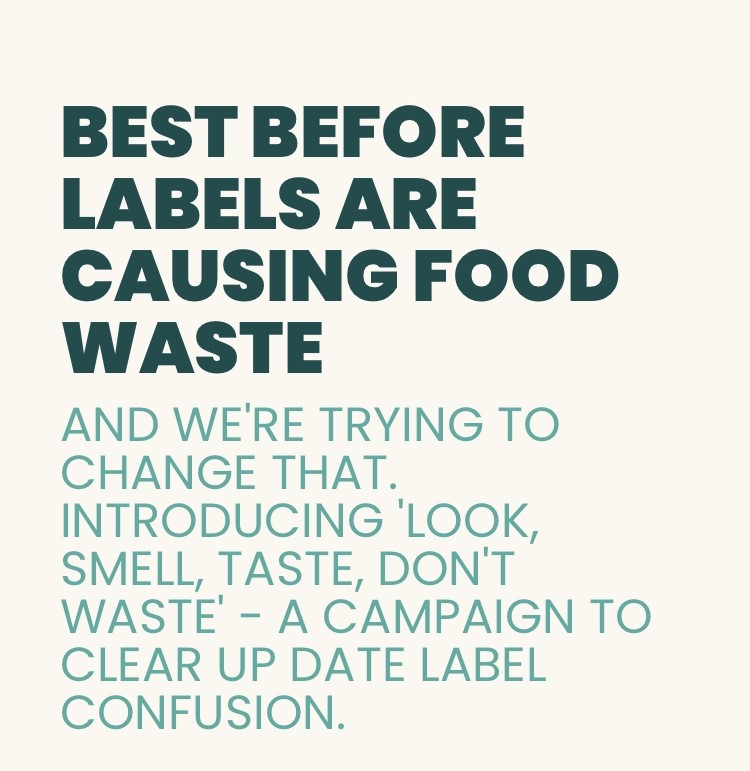
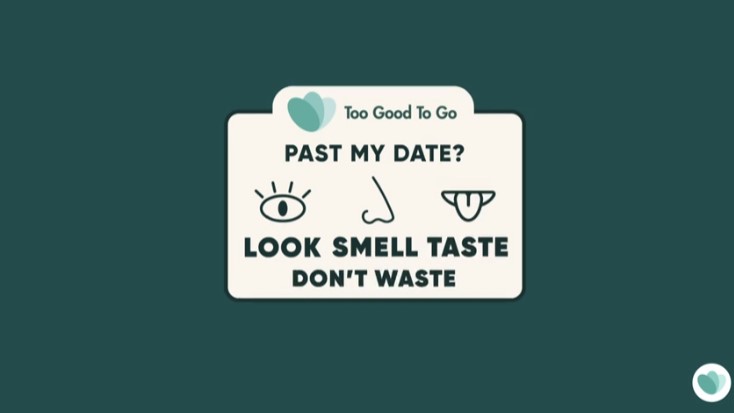
Select an image to enlarge it. The campaign images below refer to best-before labels. They do not apply to use-by dates.
Keep your food fresher for longer
Once you’ve checked the date, a few simple storage habits can help you make the most of your food.
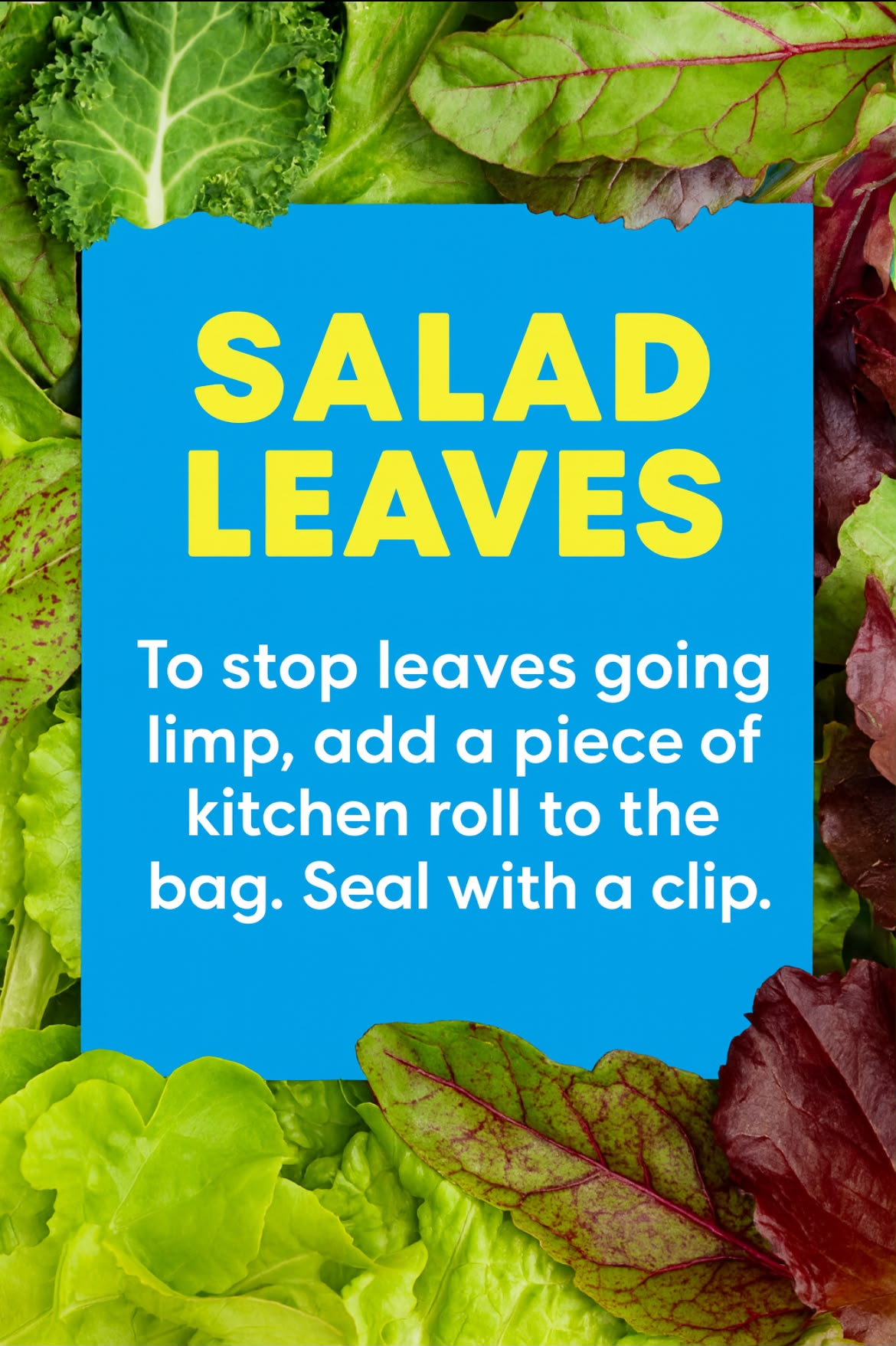
Keep your salad crisp
Keep salad leaves in the fridge. Add a clean piece of kitchen paper to the bag to absorb excess moisture, then close the bag. Follow any use-by date and instructions about how soon to eat them after opening.
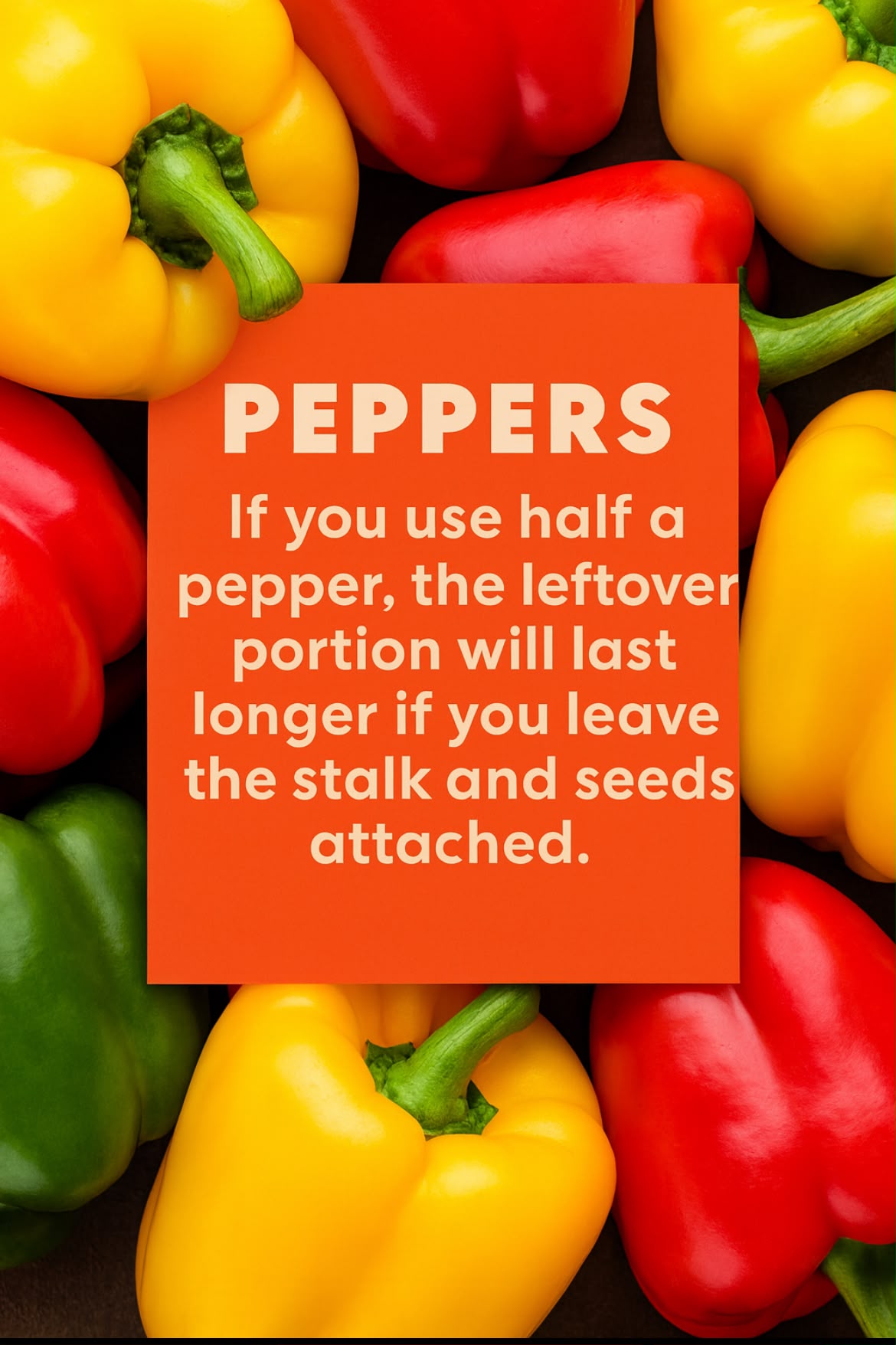
Save that other half
Keep peppers in the fridge. If you only need half, leave the stalk and seeds attached to the other half and refrigerate it in a bag or container. You can also slice spare peppers and freeze them in an airtight container for cooking later.
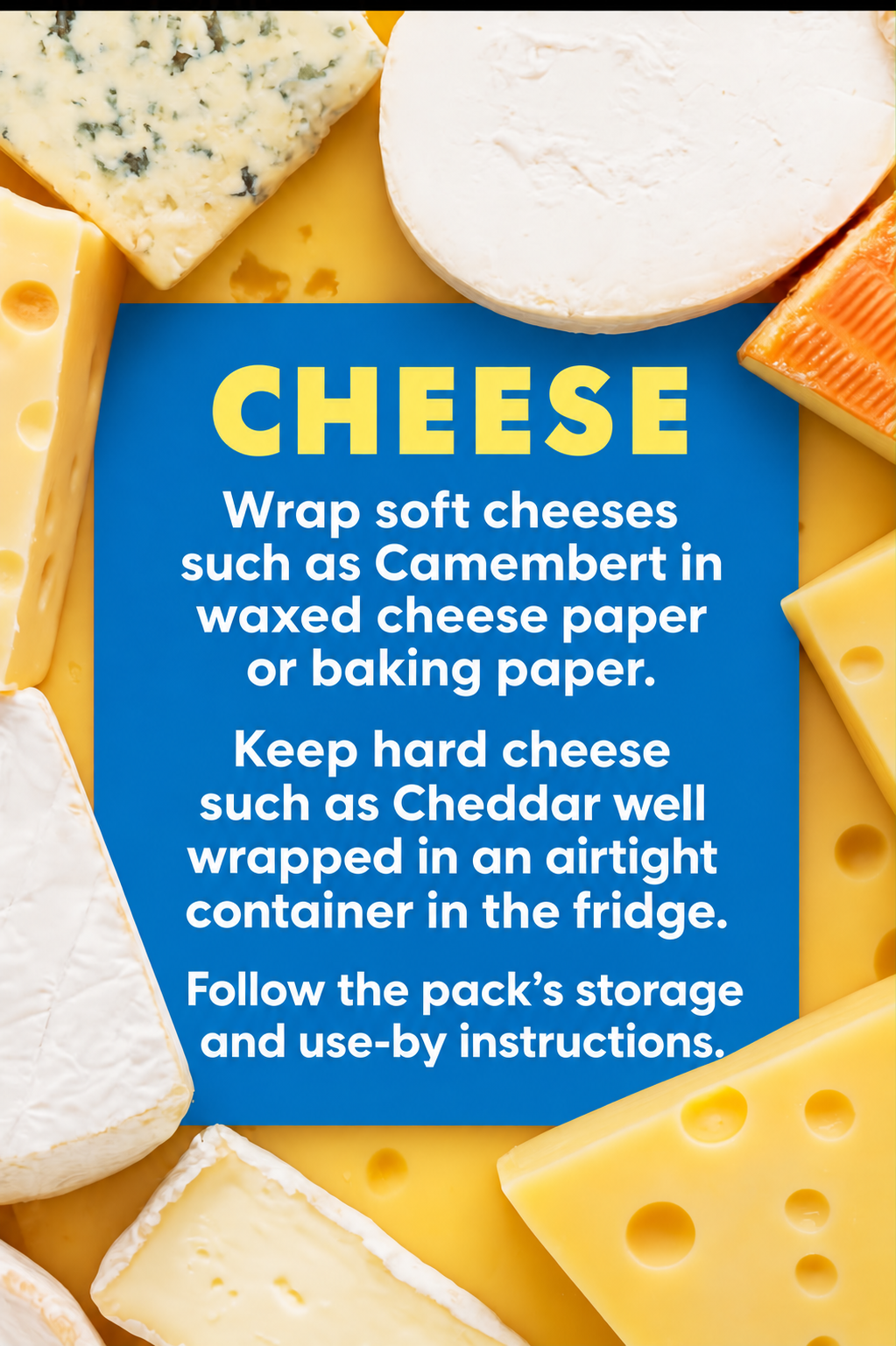
Make the most of your cheese
Wrap soft cheeses such as Camembert in waxed cheese paper or baking paper.
Keep hard cheese, such as Cheddar, well wrapped in an airtight container in the fridge to help prevent it drying out. Keep cream cheese, ricotta and cheese in brine in their original containers, with the lids closed.
Follow the pack’s storage instructions, use-by date and advice about how soon to eat it after opening. Spare hard cheese can be grated and frozen for cooking later.
Give celery leaves a second helping
Keep celery in the fridge, wrapped in a damp tea towel, and use the leaves while they’re fresh.
Don’t throw away the leaves—wash them and use them in soups and salads, or make your own celery salt →
Always follow the storage instructions and use-by date on the pack. Select a poster to see the larger version.
Make the most of your pumpkin — cooking, decorating and composting ideas →
More ways to save good food
Good food goes further when we share ideas. Explore these useful places for rescuing surplus food and finding community fridges.
Too Good To Go
Buy discounted surplus food from participating shops, cafés and restaurants through the Too Good To Go app. Reserve and pay in the app, then collect at the time shown.
This is a paid service. Offers depend on what’s available near you.
Explore Too Good To Go →Hubbub’s Community Fridge Network
Discover how community fridges help neighbours share surplus food, and use Hubbub’s fridge finder to explore other locations across the UK.
Check each fridge’s own visiting information for opening times and any donation arrangements.
Explore the Community Fridge Network →Every bit of good food put to use helps.
Put good food to use
Ready to cook? Find a recipe for what you have, or share suitable food you won’t use with the community fridge.